House Democratic Leader Hakeem Jeffries is inverting one of his party’s most famous lines.
“Republicans started this redistricting war, and Democrats have made clear, we’re going to finish it,” Jeffries told CNN on Saturday. “When they go low, we strike back.”
The declaration — a combative twist on former first lady Michelle Obama’s “when they go low, we go high” mantra — signals a party that has formally abandoned the fair-maps high ground it spent a decade building. For Colorado voters who approved an independent redistricting commission in 2018, the fight is no longer theoretical. Jeffries and his allies are already looking at the state for 2028.
Both parties have been redrawing congressional maps at a pace not seen since the last full census cycle, with courts and ballot initiatives clearing the way in state after state.
On the Republican side, the Supreme Court allowed Texas to use a new map in a 6-3 decision last December, a map designed to deliver as many as five additional GOP seats. Justice Samuel Alito wrote in a concurrence that the partisan motivation was “indisputable” but argued that courts cannot police partisan redistricting under the precedent set in Rucho v. Common Cause. North Carolina approved a new map in October targeting the seat held by Rep. Don Davis, which would shift the state’s delegation from 10-4 Republican to 11-3. Missouri signed a new map into law in September.
Democrats have answered in kind. The Supreme Court cleared California’s new congressional map on Feb. 4, denying Republicans’ emergency request to block boundaries designed to flip five GOP-held seats. California voters had approved Proposition 50 with about 64% support in November 2025. In Virginia, the state Supreme Court ruled Feb. 13 that an April 21 redistricting referendum can proceed. Democrats there have proposed a 10-1 congressional map, up from a current 6-5 Democratic advantage. In Utah, a state court struck down the GOP-drawn map as an unlawful partisan gerrymander and ordered a fairer replacement for 2026.
The one place Democrats have stalled themselves is Maryland, where the state House passed a new map 99-37 that would eliminate the state’s sole Republican-held seat. But Democratic Senate President Bill Ferguson has refused to support it, noting that a similar 2021 map was struck down as extreme partisan gerrymandering.
Jeffries has pushed back publicly on Ferguson’s resistance. “One man shouldn’t stand in the way of the people of Maryland…being able to decide,” he told CNN.
The Cook Political Report’s assessment: the likeliest outcome is roughly a wash, with Republican gains in Texas, North Carolina, Missouri, and Ohio offset by Democratic gains in California, Virginia, and Utah. The net depends heavily on whether the Virginia referendum passes and whether Ferguson relents in Maryland.
Rep. Glenn Ivey, D-Md., put it bluntly to CNN: “It’s an awful game… We better not lose the House by one seat.”
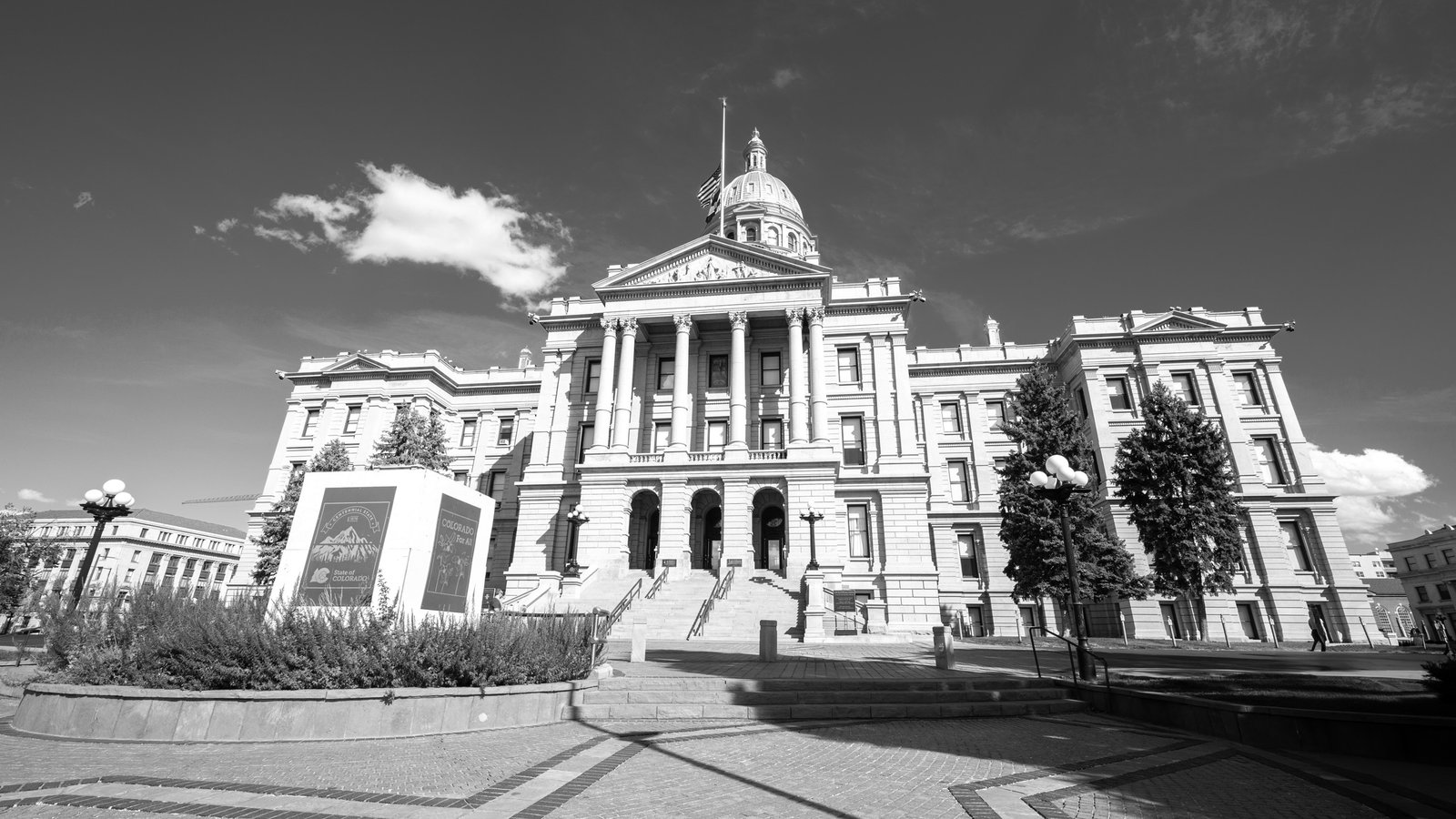
For Coloradans, the redistricting fight carries a specific question: Should the state dismantle the independent commission voters created in 2018?
Attorney General Phil Weiser, who is running for governor in 2026, became the first statewide official to support an emergency redistricting ballot measure last October. Under his proposal, a 2026 ballot measure would allow the state legislature to draw new congressional maps for 2028, bypassing the voter-approved commission.
Rep. Yadira Caraveo went further, calling for outright repeal of the independent commission. Sen. Michael Bennet backed a “one-time” change rather than a full repeal.
Gov. Jared Polis has taken the opposite position. He called the effort “a craven and cynical mid-decade redistricting ploy.” Sen. John Hickenlooper also expressed opposition, according to Rocky Mountain PBS.
The split has effectively turned the 2026 governor’s race into a proxy fight over who draws Colorado’s maps. Additional legal barriers exist: a 1980s state court ruling that voided a “midnight gerrymander” creates precedent against mid-decade redistricting, and a separate proposed constitutional amendment would give the governor authority to suspend the commission entirely.
Meanwhile, the DCCC has added Colorado’s 5th Congressional District — the Colorado Springs seat — to its target list for the first time. And NBC News reported that Jeffries’ team is positioning Colorado, along with Washington, New York, and New Jersey, for 2028 constitutional changes.
Jeffries is staking his political capital on the redistricting fight at a moment when his standing within his own party has deteriorated sharply.
Congressional Democrats hit 18% overall approval in a December Quinnipiac poll — a record low since 2009. Among Democrats themselves, only 42% approved of their own party’s lawmakers, while 48% disapproved. A Pew Research survey found that 59% of self-identified Democrats disapproved of party leaders in Congress, with only 40% approving — the first time since 2014 that more Democrats disapproved than approved.
Jeffries’ personal numbers have dropped from 80% approval among Democrats in 2023 to 64% in December 2025, according to the Quinnipiac data.
The dissatisfaction has translated into concrete defections. During the 43-day government shutdown last November, six House Democrats broke ranks to vote with Republicans, defying Jeffries’ insistence on linking a deal to a three-year extension of Affordable Care Act subsidies. The six — Reps. Jared Golden of Maine, Marie Gluesenkamp Perez of Washington, Henry Cuellar of Texas, Don Davis of North Carolina, Adam Gray of California, and Tom Suozzi of New York — all represent districts won by former President Donald Trump.
That same month, 23 House Democrats voted with Republicans to rebuke Rep. Jesus “Chuy” Garcia of Illinois over a controversial election filing. Jeffries had opposed the resolution, calling Garcia “a progressive champion.”
An Axios survey of 113 Democratic House candidates found that only 24 confirmed they would support Jeffries for speaker or leader. Twenty said they would not. Fifty-seven remained noncommittal. “I think we need to have a new type of leadership that’s going to fight back significantly harder against the Trump administration,” Democratic candidate Heath Howard told Axios.
An Our Revolution survey of grassroots Democrats found 70% said Jeffries should step aside, and 77% backed a primary challenger against him. New York City Council member Chi Osse, 27, filed to challenge Jeffries in the NY-8 primary before ultimately backing off. Candidate Vance Bostic is still running. Even Jeffries’ top deputy, Rep. Katherine Clark, faces a primary challenge from Jonathan Paz, who argues Democratic leadership has become ineffective.
The redistricting offensive requires enormous sums. House Majority Forward, a super PAC linked to Jeffries, has committed at least $5 million to the Virginia referendum alone. Jeffries told CNN he is willing to spend “tens of millions of dollars” on the effort.
Where that money comes from has drawn scrutiny. The DCCC accepted nearly $4 million from Invariant, a lobbying firm that represents SpaceX and Palantir — companies tied to Elon Musk and Peter Thiel, respectively. Over $2.5 million of that arrived in January 2025, representing more than a quarter of the DCCC’s entire monthly fundraising haul, according to Sludge.
Jeffries personally raised approximately $1.2 million from the finance sector in the first quarter of 2025. Henry Laufer, a former chief scientist at Renaissance Technologies, and his spouse contributed a combined $601,400 to Jeffries’ victory fund. That fundraising occurred while grassroots activists protested outside Jeffries’ Brooklyn office, according to Sludge.
Eric Holder’s National Democratic Redistricting Committee, co-founded with former President Barack Obama, has identified 13 priority states for 2025-2026, targeting governor’s races and state supreme court seats in Arizona, Florida, Michigan, Texas, and other states that control the redistricting process.
Despite the money and effort on both sides, the Cook Political Report’s tracker projects the redistricting arms race will likely be a wash for 2026. Republican-drawn maps in Texas (up to five seats), North Carolina (one seat), Missouri (one seat), and Ohio stand to be offset by Democratic-drawn maps in California (five seats), Virginia (as many as four seats, if the referendum passes), and Utah (one seat).
The real stakes, multiple sources suggest, extend beyond 2026. NBC News reported that New York Democrats have unveiled a constitutional amendment allowing the legislature to redraw maps if another state does mid-decade redistricting. New Jersey Gov. Mikie Sherrill has signaled she is open to joining. Colorado, Washington, and Pennsylvania are all in play for 2028.
The open question is whether Jeffries can execute a multi-state redistricting war while his own coalition fractures. Only 24 of 113 Democratic candidates surveyed would commit to supporting him as leader. His approval among his own party’s voters has dropped 16 points in two years. Six members broke ranks during the shutdown, 23 defied him on the Garcia vote, and as many as 10 Senate Democrats were prepared to break ranks on the spending fight.
Jeffries is betting that redrawn maps will deliver the House majority that would validate his leadership. The party’s progressive wing is betting that his leadership is the problem, not the solution. Both sides will have their answer by November.
DENVER — Protect Kids Colorado delivered approximately 170,000 signatures to the Colorado Secretary of State’s office in support of Initiative 108, a ballot measure...